There's a thing every studio operator runs into eventually: you ship product number three, and you realize you're solving problems you already solved on product number one — but you're solving them again from scratch because the lessons didn't transfer.
We hit this around product four. We were running the same kind of paywall A/B test on Cherriva that we'd already run on TunedForYou, getting the same kind of result, and burning the same kind of budget to learn what we already knew.
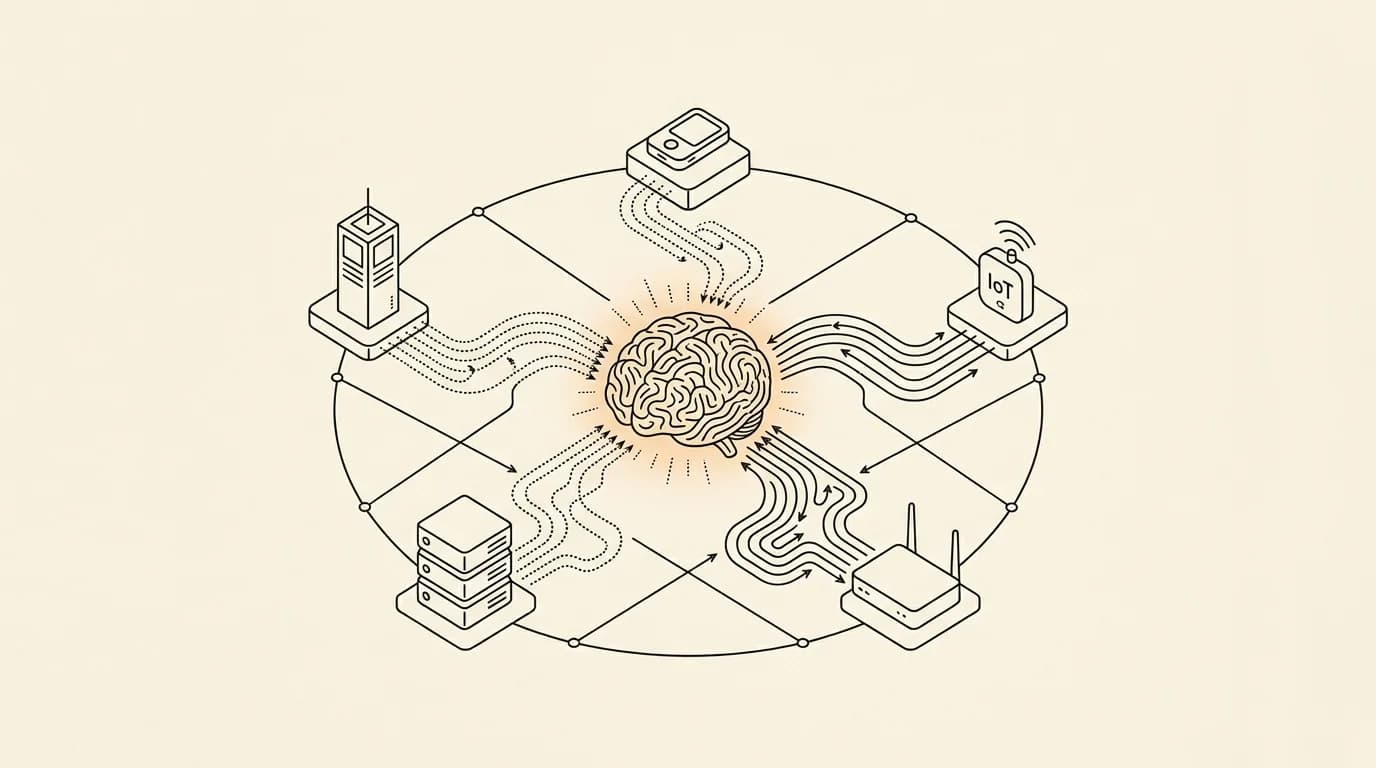
That's when we built the meta-loop — the layer that turns each product's lessons into shared knowledge for the swarm. Two years in, this is what compounding intelligence looks like across a seven-product portfolio.
The flywheel
Every product the swarm runs feeds three kinds of data into the shared layer:
Behavioral patterns. Which copy converted, which paywall flow stuck, which onboarding moment lost the most users. These become rules in the studio's pattern library that any new product can pick up.
Acquisition signals. Which ad creative formats work in which markets, which keyword clusters compound vs decay, which CPCs are price-discovering. These become priors for the Acquire agent on every future product.
Infrastructure lessons. Which APIs are flaky, which payment processors clear faster, which proxy providers go down on weekends, which LLM models hallucinate which kinds of structured output. These become defaults for every Build run.
None of these are products. They're substrate. But they're what makes the seventh product cheaper to ship than the first.
What each product taught the swarm
Concrete examples — each product solved a problem that ended up benefiting the rest.
TunedForYou — consumer impulse pricing
TunedForYou is our most price-sensitive product. The customer is buying a gift; the decision is emotional but the price has to feel justified. We ran nearly 40 pricing tests over its first year — exact price points, anchor displays, per-day vs per-week framing, currency localization, regional pricing tiers.
The pattern that fell out: anchored per-day pricing ("$1.28/day, billed annually") outconverts both monthly and annual pricing by 20-30% in consumer SaaS. The pattern was then applied to:
- Cherriva subscription tiers (worked)
- InkOn premium upgrade (didn't work — different buyer psychology, kept lump-sum)
- VacateNotice (irrelevant — flat fee model)
We learned both what works and where it doesn't. Both are valuable.
Cherriva — retention loop design
Cherriva is a conversational product, so retention is everything. The first version had a 30-day churn rate of 70%. By the time we got it under 20%, we'd learned a lot about what makes users come back.
The pattern: scheduled re-engagement built into the product itself. Not push notifications begging for return; in-product moments — a "your companion has something to say" trigger, a memory callback, a continuation of an ongoing storyline — that pulled the user back without feeling like marketing.
We applied this to:
- TunedForYou (post-purchase: "your song is ready to share — here's a tip" → upsell)
- PolyClawster (after-market settlement: "your prediction was right" / "your prediction lost — here's why")
- Human Browser (post-task: "your run completed — here's the audit trail")
In every case, the engagement loop wasn't pushy notification. It was a value moment in the product itself.
PolyClawster — high-trust transaction design
PolyClawster handles real money on-chain. The trust bar is higher than anything else in the portfolio — if a user thinks the bot is sketchy, they leave instantly and never come back.
What we built: a transparency layer where every position the bot opened, every transaction it executed, every cost it incurred was visible in real-time on the user's dashboard. No hidden math. No "trust us" moments. Everything was inspectable.
That pattern of radical transparency became the default for:
- Human Browser (every browser session is recordable; every action is in the audit log)
- Clawster (the same — every agent action is logged; users can replay sessions)
- TunedForYou (the song generation process is visible: prompt sent → drafts received → final track)
For B2B products especially, this turned out to be the single biggest trust-building feature. It also dramatically reduced support load.
Human Browser — anti-bot landscape map
Human Browser was originally built so our other products could use the web programmatically. It became one of the highest-value things in the portfolio because every other AI agent team needs this and few want to build it.
But the surprising part: HB's continuous monitoring of which sites use which anti-bot stack, which proxy pools get burned when, which fingerprint patterns survive new detection rollouts — that intelligence flowed back into every other product's ops.
When TunedForYou's competitor analysis runs need to scrape Suno's pricing page, the swarm knows from HB's monitoring whether that page is currently passable. When Cherriva needs to check influencer post engagement on Instagram, HB's monitoring tells the swarm what's working and what's getting flagged this week.
This is the closest thing to a "data moat" in the portfolio. Two years of cross-vertical anti-bot intelligence isn't easy to replicate.
Clawster — agent deployment patterns
Clawster taught us how non-technical users deploy AI agents. The friction points, the moments of confusion, the support patterns. We learned that "set up your agent in 2 minutes" was the right promise — anything longer, and the customer dropped out before the agent was even running.
The lesson: ruthlessly compress every B2B onboarding flow. We applied this to Human Browser's signup (used to be 8 steps, now 2), to Cherriva's premium upgrade (used to be a wall, now a one-tap), to the apply flow on a few of our consumer products.
InkOn and VacateNotice — channel learning
These two products taught the swarm about specific channels:
-
InkOn taught us mobile-first ASO. The app-store optimization patterns, the review-acquisition tactics, the keyword localization tricks. Carried forward to every future mobile product.
-
VacateNotice taught us programmatic SEO at scale. 50+ state-specific landing pages, automated content per state, schema markup discipline. Every legal/regulatory niche we look at now starts from VacateNotice's playbook.
The infrastructure that makes this real
It's not enough for lessons to exist somewhere. They have to be picked up automatically by the swarm.
We use three mechanisms:
Pattern library — versioned, structured snippets of what works, indexed by problem type. When Find specs a new product, it queries the library for relevant patterns. When Build assembles a codebase, it pulls in the pattern's reference implementation.
Live counterfactual logging — every A/B test we've ever run is logged with full context (product, audience, market, result). The Optimize agent uses this to skip tests we've already run elsewhere and to predict outcomes for new tests.
The self-learning core's nightly review — at 03:00 every night, the meta-loop reads the day's events across all products and writes a journal entry. Patterns that surface get auto-promoted into the pattern library after enough confirmations.
This is the infrastructure that turns "we run seven products" into "the seventh product is faster and smarter than the first six combined."
The honest part
This doesn't make the studio invincible. Three things still bite us regularly:
Wrong-product cross-pollination. Patterns from B2C don't always work in B2B and vice versa. The first version of our pattern library applied lessons too aggressively across audience types. We added explicit "audience match" filters that block patterns from migrating across segments they don't belong in.
Pattern decay. Things that worked in 2024 don't always work in 2026. Email-based signup flows that converted great two years ago are now consistent friction points because users expect OAuth. The library has decay scoring; patterns that stop performing get demoted automatically, but only after the swarm notices, which takes weeks.
Brand-fit drift. The swarm optimizes for conversion, not brand. Sometimes the highest-converting copy is also slightly off-brand for a particular product. The founder has to override the swarm here, and the founder is a bottleneck.
These aren't deal-breakers. They're operational realities. The compounding still works. It's just not magic.
What this means if you're starting a studio
Three pieces of advice from two years of running this:
Build the pattern library before you ship product two. If you wait until you have multiple products to start codifying lessons, you've already lost the early ones. Start the library on product one, even if it has one entry.
Pick products that share a substrate. Random products that don't have anything in common don't compound. Our portfolio shares: payment infrastructure (Stripe), browser automation (Human Browser), agent runtime (Clawster), observability (custom), brand voice. Each new product gets all of that for free.
Resist the temptation to specialize too early. A studio's edge is breadth. The moment you double down on one product, you lose the compounding. Stay diversified longer than feels comfortable.
Read the related pieces: how we run 7 AI products with no employees, or the four-agent operating system that powers it.